


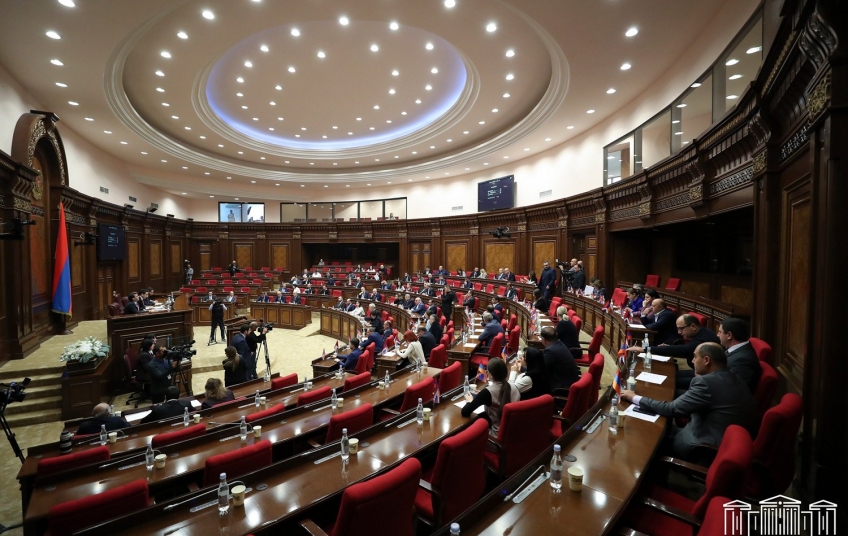

The political system of Armenia might be considered completely failed. Neither the incumbent government nor the parliamentary opposition enjoys public confidence, and it would be wrong to say that the turning point of all this is the regime change in 2018. If all things were in order before then, the events of four and a half years ago would probably not have happened. So, 2018 was just another symbolic milestone in the failure of the political system.
Undoubtedly, against the backdrop of normal domestic intra-societal developments, it is the political system which is the key actor of state management when political parties are created, and through free and fair elections they take control of state management. Acting within the law, these political parties essentially become the core of the country's political system.
And when the political parties, in general, far from being socio-political institutions without public authority, are simply a crowd united around one or more people without principles, worldview and internal rules of the game, then we can confidently state that the country has no political system, therefore, is subject to disastrous whims.
What were the main obstacles to the establishment of the political system in the post-independence period?
- After 1991, the ruling political parties could not adopt any conceptual approach to the Artsakh issue, decide whether or not to recognize Artsakh, which greatly stimulated the 2020 war and its calamitous consequences.
- The authorities failed to hold publicly accepted, confidence building elections, the credibility of which could not be questioned by at least a large part of the public.
- No Justice has been properly administered in the country (even more so today). No social justice and all acceptable rules of the game have been established for a viable system of governance to be formed and for political actors left out of power not be tempted by populist trends and as a result not turn into destructive units.
All this is especially dangerous in landlocked countries like Armenia with limited resources and blocked pipelines, a war situation and non-stop provocations and victims at the border.
For this reason, Armenia has been condemned to have tools that ensure social justice, because in the conditions we are currently in, the demand for justice takes on an extremely essential significance.
As mentioned above, it was the lack of all those things that eventually led to the regime change in 2018 and even worse consequences. Whether or not we will be able to form a new political system is difficult to answer unequivocally, but one thing is clear: we have no alternative to it.