



The election results were shocking for some part of the public and joyous for others. Such strong feelings were an expression of the simple fact that there was a dichotomy, the public was divided and the elections, once again, as in 2018 were not for the future, but against the past. Part of the public was against the incumbent government, considering it "traitor," "capitulator," "unprofessional," while other part of the public thought that it had voted against the "formers," "robbers," and, thus, prevented the reproduction of the old regime. It was also obvious that the elections were not merely conducted on the principles of "for" and "against," they also contained queries in different dimensions.
For those who voted against the incumbent government, the issues of Artsakh and national security in general were in the first place, whereas the issues of social justice and the obsession with punishing the “formers" were vital for those who voted against the "formers," which was skillfully used by Pashinyan, accompanied with populist slogans. It is especially characteristic that Pashinyan, having ruled Armenia for three years, continues to behave as an oppositionist, whose main task is finding wrongdoers and laying the blame on others. This, of course, is a phenomenal feature.
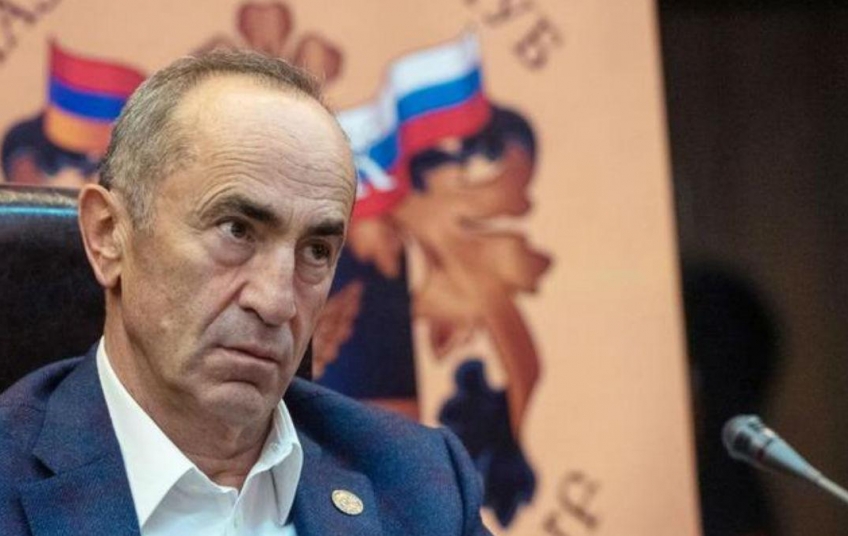
These seem to be the whole logics and contents of the elections. Who represents and how was each party prepared for the campaign? These are other questions: what was each party campaigning for and what future project was it presenting to the voters? If in case of the incumbent government everything is clear - social populism, division of public into conflicting parties, primitive rhetoric accompanied by threats of punishment, then in Kocharyan's case the bloc's voter list and campaign raised certain questions.
The second president, perhaps, failed to present to the public a new team that is not responsible for the sins of the past and can speak to the public in a language it understands, present a vision of the future and unite the conflicting parties, show that there will be no return to the past, just the opposite, the revolution promised but not realized by Pashinyan will be carried out. To put in simple words, Kocharyan's experience of political and state governance and international relations had to be combined with revolutionary changes and guarantees of justice desirable for the public.
It was also necessary to assure that there will be social lifts in Armenia, the capable will be able to rise, and the defeated will move in the opposite direction, and this will be shown by the example of the bloc's pre-election list. Kocharyan did not do all those. The majority of those who voted for him, in fact, voted against Pashinyan for security reasons, but not for the future, as Pashinyan's electorate did.
This is a brief description of the past elections, it is another question whether it will become a lesson for the political actors of Armenia or everything will continue in the same way.